
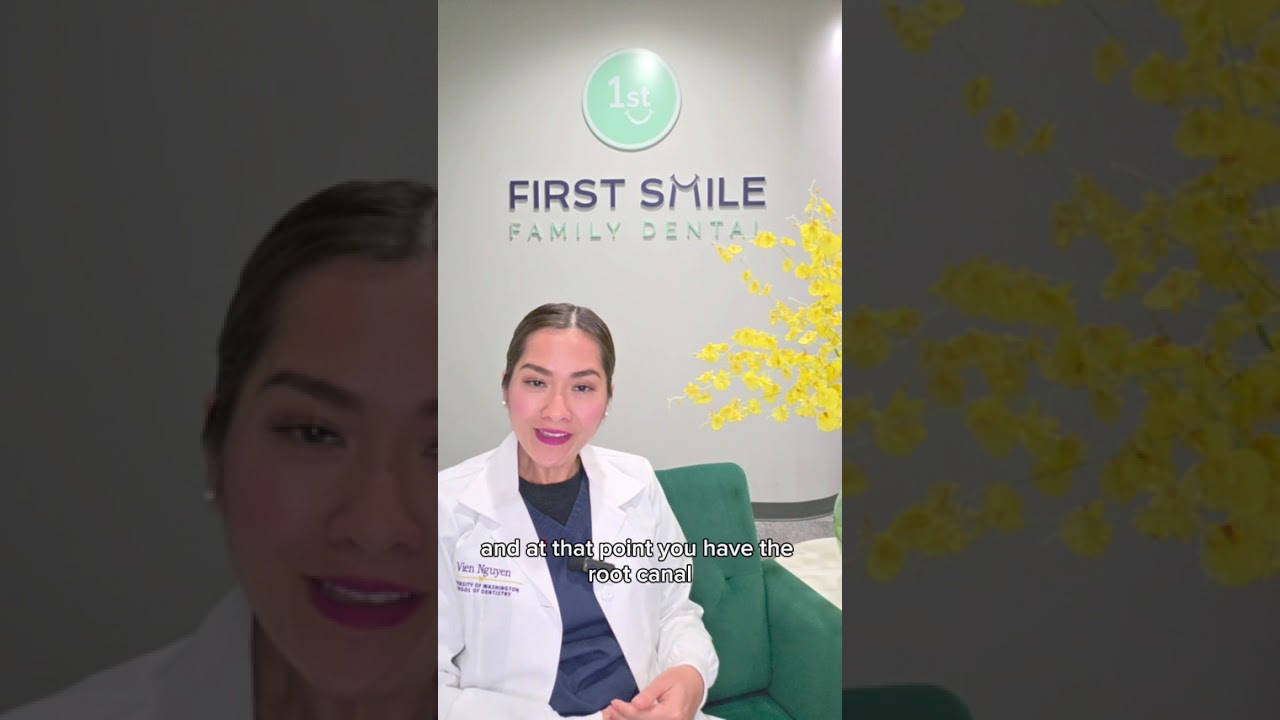
Does root canal treatment hurt?
A lot of patients ask, "Does a root canal hurt?" We use local anesthetic to numb the tooth and surrounding area and help keep you comfortable during the procedure.
In some cases, a severely inflamed tooth can be more challenging to numb completely. If that happens, there are additional anesthetic techniques we can use to help achieve adequate anesthesia before continuing treatment.
Antibiotics aren't routinely needed simply to make a tooth easier to numb. They may be prescribed when there are signs that an infection is spreading or when other clinical findings indicate that they're appropriate.
How long does root canal treatment take?
Another question is, "How long does root canal treatment take?" Depending on the tooth and the condition we're treating, a root canal may be completed in one appointment or may require multiple visits.
During treatment, we access the inside of the tooth, clean and disinfect the root canal system, and then fill and seal the canals. If additional treatment or time is needed between visits, we may place medication inside the tooth and temporarily seal it until the next appointment.
The amount of time each visit takes depends on the tooth, the number and complexity of the canals, and other clinical factors.
How much does a root canal cost?
The cost of root canal treatment varies depending on the tooth and the complexity of the procedure. Molars generally have multiple canals and can be more complex to treat than many front teeth, so treatment costs may differ.
The cost can also vary depending on whether treatment is provided by a general dentist or an endodontist and on your individual dental insurance benefits. Once we've evaluated the tooth, we can give you a more specific estimate.
Do you need a crown after a root canal?
Whether you need a crown after root canal treatment depends on which tooth was treated and how much healthy tooth structure remains. Back teeth such as molars and premolars often need additional protection because they experience significant chewing forces and may already have substantial structural damage.
In those situations, a crown or another appropriate restoration may be recommended to help protect the remaining tooth structure and restore function.
For a front tooth, a crown isn't automatically necessary after every root canal. Depending on the amount of remaining healthy tooth structure and the condition of the tooth, a filling or another restoration may sometimes be appropriate. Your dentist will recommend the restoration based on the individual tooth.
Should you get a root canal?
If the pulp inside a tooth is irreversibly inflamed or infected and the tooth can be predictably restored, root canal treatment may allow us to preserve your natural tooth rather than remove it.
If the condition isn't treated, the inflammation or infection can progress and affect the tissues and bone around the root. In some cases, a dental infection can spread into surrounding facial spaces and become a more serious health concern.
That doesn't mean an infected tooth routinely spreads infection directly into neighboring teeth or that you'll automatically need multiple root canals. Each nearby tooth needs to be evaluated on its own.
If your dentist recommends a root canal, ask them to show you what they're seeing and explain why the treatment is being recommended. The goal is to address the problem and preserve the natural tooth when doing so provides a predictable outcome.
Will root canal treatment be covered by dental insurance?
Many dental insurance plans provide some coverage for root canal treatment, but benefits vary significantly between plans. Your deductible, annual maximum, coverage percentage, tooth being treated, and other plan provisions can affect your out-of-pocket cost.
We can review your individual benefits and provide an estimate before treatment.
Can root canal treatment cause cancer?
Patients sometimes tell me that they've read online that root canal treatment can cause cancer. Current scientific evidence doesn't support the claim that root canal treatment causes cancer.
Root canal therapy is an established treatment used to remove inflamed or infected pulp tissue, disinfect the canal system, and preserve a tooth when appropriate.
Can I treat an infected tooth with antibiotics?
Patients will also ask, "Can I treat an infected tooth with antibiotics?" Antibiotics aren't a substitute for the dental treatment needed to address an infection originating inside the root canal system.
Depending on your symptoms and clinical findings, antibiotics may not be necessary at all. They're generally reserved for situations where there are signs of spreading infection, systemic involvement, or other specific indications.
When root canal treatment is needed, the dentist accesses the inside of the tooth, removes the affected pulp tissue, cleans and disinfects the canal system, and then fills and seals it. In other cases, extraction may be necessary if the tooth can't be predictably saved.
Repeatedly taking antibiotics without addressing the source of a dental infection isn't an appropriate long-term solution and can contribute to antibiotic resistance.
If you’re searching for quality dental care, we’re here to help. Call (253) 544-4073 or email [email protected] to schedule your visit. Our team is committed to keeping your smile healthy.
At First Smile Family Dental, a root canal treats a tooth infected due to decay, cracks, or trauma. The nerve and pulp tissue are removed during the process, and the insides are cleaned and sealed to prevent further damage. By removing the infected pulp and sealing the root canals, root canal treatment helps prevent the spread of infection to the surrounding tissues and preserves overall oral health. Root canal treatment helps maintain oral health by eliminating infection and preserving natural tooth structure. By saving the tooth, the balance and alignment of the adjacent teeth are preserved, reducing the risk of additional oral health issues in the future.
Reasons for Root Canal Treatment in Federal Way, WA
Tooth Decay
When tooth decay reaches the pulp, it can cause infection and inflammation, leading to pain and sensitivity.
Dental Trauma
Trauma or injury to the tooth can damage the pulp, requiring root canal treatment to save the tooth.
Dental Infections
Bacterial infections can reach the pulp through untreated cavities or gum disease, causing pulp inflammation and infection.
The Procedure for Root Canal Treatment in Federal Way, WA
The dentist in Federal Way, WA, will administer local anesthesia to numb the area around the affected tooth, ensuring a comfortable procedure. An access hole is created in the tooth to reach the pulp. The infected or damaged pulp is carefully removed from the root canals using specialized instruments. The root canals are shaped, cleaned, and disinfected to remove any remaining bacteria and debris. The cleaned root canals are filled with a biocompatible gutta-percha, which seals the canals to prevent recontamination. After the root canal treatment, a dental crown or filling is placed on the tooth to protect and restore its function and appearance. Contact us to learn more.
The Benefits of Root Canal Treatment
Preservation of Natural Tooth
Root canal treatment allows for preserving a natural tooth that would otherwise need to be extracted. Keeping natural teeth is crucial for maintaining proper chewing function and speech and preventing adjacent teeth from shifting out of alignment.
Restored Tooth Function
After a root canal, the tooth is sealed and often restored with a dental crown or filling. This restoration provides strength and stability, allowing the tooth to function normally for biting and chewing. With proper care, a root canal-treated tooth can last for many years.
Preventing Infection Spread
Infected dental pulp can lead to the development of an abscess or the spread of infection to the surrounding tissues. By removing the infected pulp through a root canal, the spread of infection is halted, preventing further complications and potential damage to the jawbone and neighboring teeth.
It's essential to consult with our Federal Way, WA dentist if you experience persistent tooth pain, sensitivity, or any signs of tooth infection. They can assess your condition and determine if root canal treatment is necessary to save your tooth and relieve your symptoms. If you want to know more about root canal therapy and how it can help you have a healthier smile, visit First Smile Family Dental at 32717 1st Ave S Suite 9, Federal Way, WA 98003, or call (253) 544-4073.