
When you are missing several teeth or considering replacing an entire arch, dental implants can offer a way to restore your smile and improve everyday activities such as eating and speaking. Two approaches you may encounter are traditional dental implants and All-on-4® dental implants. Both use implants placed in the jawbone to support replacement teeth, but they differ in how the implants are arranged, the types of restorations they support, and how treatment may be planned.
Understanding the differences between All-on-4 and traditional dental implants can help you prepare for a conversation with your dentist. The right approach depends on how many teeth need to be replaced, the condition of your jawbone, your oral health, and your individual treatment goals.
What Are Traditional Dental Implants?
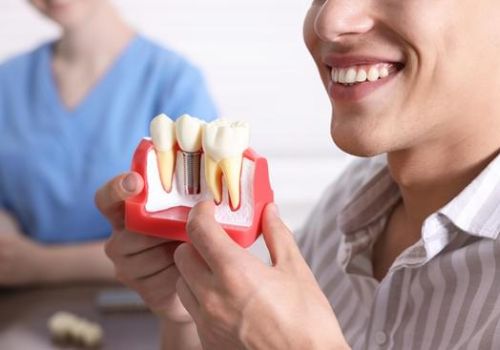
Traditional dental implants are small posts, commonly made of titanium, that are surgically placed in the jawbone to support replacement teeth. After placement, the surrounding bone gradually heals and integrates with the implant surface through a process called osseointegration. This helps provide a stable foundation for a dental restoration.
One implant may support a single dental crown, but dental implants can also support bridges and full-arch restorations. Replacing several missing teeth does not necessarily require placing one implant for every tooth. The number and position of implants depend on the restoration being planned and the patient's anatomy.
According to the American College of Prosthodontists, dental implants can support the replacement of a single tooth, multiple teeth, or an entire arch of teeth. This flexibility allows implant treatment to be customized for different patterns of tooth loss.
What Are All-on-4 Dental Implants?
All-on-4 is a full-arch tooth replacement approach that uses four strategically positioned dental implants to support a complete set of replacement teeth in the upper or lower jaw. Rather than replacing each missing tooth with a separate implant, the restoration is supported by four implants working together.
The All-on-4 concept typically involves placing two implants toward the front of the jaw and two angled implants toward the back. This arrangement is designed to make use of available bone and may reduce the need for certain bone grafting procedures in appropriately selected patients.
All-on-4 treatment is generally considered for people who are missing all or most of their teeth in an arch or whose remaining teeth cannot be predictably maintained. It is not typically intended to replace just one or two missing teeth.
All-on-4 vs. Traditional Dental Implants: Key Differences
Although both approaches rely on dental implants, the treatment experience can vary depending on the number of teeth being replaced and the type of restoration selected. This comparison highlights some of the main distinctions.
| Consideration | Traditional Dental Implants | All-on-4 Dental Implants |
|---|---|---|
| Primary purpose | Can replace one tooth, several teeth, or an entire arch | Designed to support a complete arch of replacement teeth |
| Number of implants | Varies according to the restoration and treatment plan | Typically four implants per arch |
| Restoration type | May support crowns, bridges, or full-arch prostheses | Supports a full-arch prosthesis |
| Bone requirements | May require grafting when available bone is insufficient | Angled placement may reduce grafting needs in some cases |
| Temporary teeth | Immediate temporary restorations may be possible in selected cases | A temporary fixed restoration may be attached soon after surgery when conditions allow |
| Maintenance | Cleaning methods depend on the restoration | Requires careful cleaning around and beneath the full-arch restoration |
These differences are general rather than absolute. Your dentist may recommend a different number of implants, a different loading schedule, or another type of restoration based on your specific needs.
How Do Treatment Time and Healing Compare?
Both traditional dental implants and All-on-4 treatment involve surgical placement of implants into the jawbone. Following surgery, the bone needs time to integrate with the implants before they can reliably support normal chewing forces. This biological healing process occurs even when temporary replacement teeth are provided early in treatment.
With some traditional implant procedures, a temporary restoration may be used while the implant heals, and the final crown or bridge is placed later. In selected cases, an implant may support a temporary restoration shortly after surgery. The timing depends on implant stability, bone quality, the location being treated, and other clinical factors.
One feature often associated with All-on-4 is the possibility of receiving a temporary fixed full-arch restoration on the day of implant placement. However, this approach, known as immediate loading, is only appropriate when the implants achieve sufficient initial stability and other treatment requirements are met.
Even when temporary teeth are placed immediately, the final restoration is commonly delivered after additional healing and evaluation. Patients may also need to follow a modified diet during the healing period to avoid placing excessive pressure on the implants.
How Does Jawbone Health Affect Your Options?
Dental implants depend on adequate bone support. When teeth have been missing for an extended period, the jawbone in those areas may lose volume because it no longer receives the same stimulation from natural tooth roots. The amount and location of remaining bone can influence implant placement and restoration design.
Traditional implant treatment may involve bone grafting when the existing bone cannot adequately support the planned implants. Grafting can help create a more suitable foundation, although it may add procedures and healing time to the treatment process.
All-on-4 uses a particular implant arrangement that may help clinicians work around certain anatomical limitations. However, this does not mean everyone with significant bone loss is a candidate or that grafting is never necessary.
A clinical examination and appropriate dental imaging are essential for evaluating bone availability, identifying important anatomical structures, and determining which treatment approaches may be suitable.
What Is the Cost Difference Between All-on-4 and Traditional Dental Implants?
Cost is an important consideration when comparing dental implants, especially when multiple teeth need replacement. However, it is difficult to make a meaningful price comparison without first understanding the extent of treatment required.
Traditional implant treatment for a single missing tooth is a very different procedure from restoring an entire arch. For full-arch replacement, the total cost may depend on the number of implants, the need for extractions or grafting, the materials used for the restoration, and the complexity of the treatment.
All-on-4 may involve fewer implants than some other full-arch treatment plans, which can affect the overall cost. However, fewer implants do not automatically mean the treatment will be less expensive. Surgical procedures, temporary restorations, final prosthetic materials, laboratory work, and ongoing maintenance all contribute to the total investment.
Your dentist can provide a personalized treatment estimate after evaluating your oral health and discussing the available options. If financing or dental insurance benefits are relevant, the practice can explain which arrangements may apply to your treatment.
How Do You Care for Traditional and All-on-4 Dental Implants?
Both approaches require ongoing home care and professional maintenance. Although dental implants cannot develop cavities the way natural teeth can, the surrounding gums and bone remain vulnerable to inflammation and disease.
Peri-implant mucositis involves inflammation of the soft tissues around an implant. A more advanced condition, peri-implantitis, can involve inflammation and loss of supporting bone. Regular dental evaluations and effective plaque control help your dental team identify concerns before they become more serious.
For an implant-supported crown or bridge, cleaning may involve brushing and using floss or specialized interdental tools around the restoration. Full-arch restorations often require additional attention to areas beneath the replacement teeth and around the supporting implants.
Your dental team can demonstrate the cleaning techniques and products appropriate for your restoration. Some full-arch prostheses may also require professional removal or other maintenance when clinically indicated.
What Are the Benefits and Limitations of Each Approach?
Traditional dental implants offer flexibility because they can support different types of restorations. They may be appropriate when only a few teeth are missing, when individual crowns or bridges are desired, or when a particular full-arch design calls for more than four implants.
All-on-4 is specifically designed for full-arch replacement. For appropriately selected patients, it may allow a fixed temporary restoration to be provided early in treatment and may reduce the need for certain grafting procedures. However, the restoration depends on the health and stability of its supporting implants, and complications affecting an implant or the prosthesis may require additional treatment.
Neither approach eliminates the possibility of surgical complications, implant failure, restoration damage, or future maintenance. Patients should also understand that dental implants may not reproduce every sensation or function of natural teeth.
The advantages and limitations of each option should be considered alongside the condition of any remaining natural teeth. When teeth can be predictably preserved, keeping them may be preferable to removing them solely to pursue a full-arch implant restoration.
Which Dental Implant Option Is Right for You?
Choosing between traditional dental implants and All-on-4 dental implants begins with understanding your oral health and what you hope to accomplish. Someone missing a single tooth has different needs from someone who requires replacement of an entire upper or lower arch.
Your dentist will consider the condition of your remaining teeth, gum health, available bone, medical history, bite, and preferences before recommending treatment. The evaluation may also include discussing alternatives such as implant-supported bridges, removable implant overdentures, or other tooth-replacement options.
Both traditional dental implants and All-on-4 can provide meaningful improvements for appropriately selected patients. The goal is not simply to choose the treatment with the fewest implants or shortest advertised timeline, but to develop a plan that supports comfortable function, manageable maintenance, and long-term oral health.
If you have questions, we would love to answer them for you. Please give us a call at the office at (253) 544-4073, or you can email us at [email protected]. Our staff would love to talk with you!
Don't forget to follow us on social media Facebook, Instagram.